
UK Pastors shy away too often, but teaching about Stewardship is vital – and the Generosity Report 2026 shows that it grows rather than diminishes your leadership (if it’s done the right way).
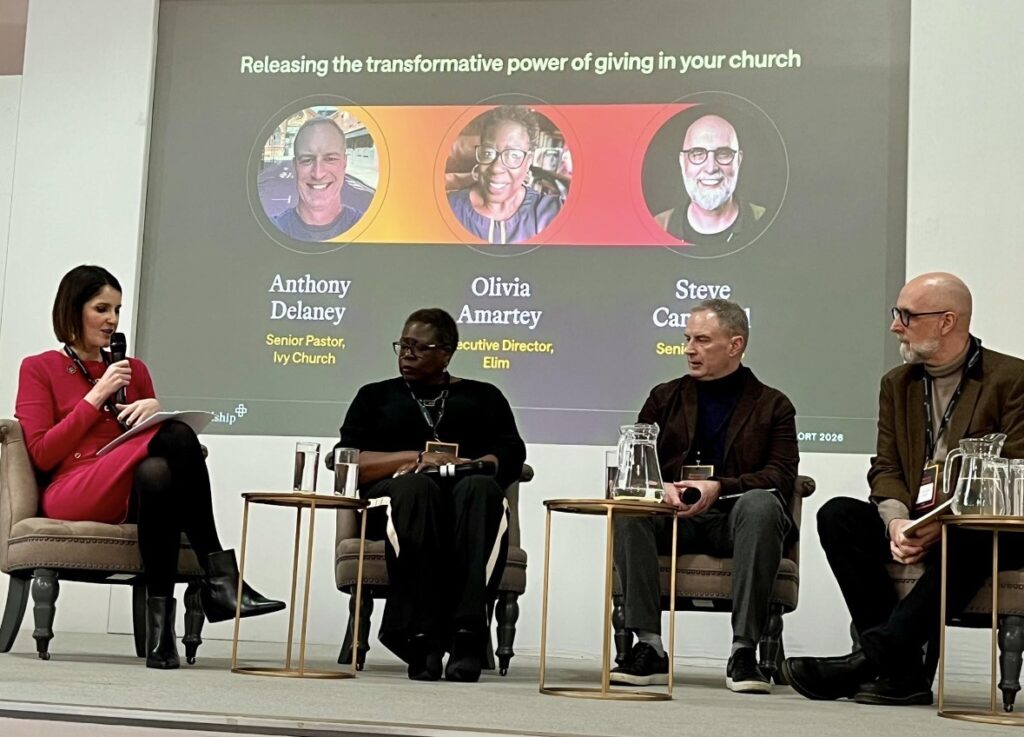
Yesterday I had the privilege of attending – and contributing on a panel at – the launch of the Generosity Report 2026 from Stewardship in London. Based on responses from over 6,000 UK Christians, the report offers the most insightful snapshots we currently have of Christian generosity in the UK, and its findings carry significant implications for church leaders, particularly around trust, teaching on generosity, and discipleship – especially interesting is what we learn about young people’s appetite to know more in terms of teaching and being mentored on money. As someone deeply passionate about the health of the local church and the formation of generous, joyful disciples, with a conviction that leaders can and must speak better about stewardship (and some resources in the pipeline to help you) I came away both encouraged and challenged by what this research reveals.
What follows isn’t a repeat of all the data you can find there or a summary of every chart (please check my notes on figures against the actuals I was trying my best!), but a distillation from the notes I made yesterday of about the indissoluble link between stewardship and discipleship and what I believe church leaders most need to hear right now – framed around three big, pastorally significant learnings.
1) TRUST Is the Currency of Generosity
One word dominated the room, the research, and the discussion: TRUST.
The 2026 report surveyed 6,004 self-identified UK Christians, followed by interviews with many – with respondents then grouped by depth of practice as they self identified into 4 Groups.
- Committed Christians – 1356 – attend church once a week and read the Bible at least once a week (22% of those surveyed)
- Practising Christians – 486- attend church at least once a month and read the Bible at least once a month
- Church Goers – 890 – attend once a month but read the Bible less than once a month
- Cultural Christians – 3272 – identify as Christians but with no discernible practice in attendance or Bible engagement
The data from the report is striking:
- 9 in 10 people who trust their church “a lot” give regularly
- Low trust doesn’t stop giving – it redirects it (away from the local church)
- Trust is built through regular biblical teaching
- Trust is shaped by theology, relationship, and perceived impact
Biblical Basis
This all echoes the biblical story. As my friend Dr Lucy Peppiatt reminded us so beautifully in her opening address, God’s economy is built on trust.
“The earth is the Lord’s, and everything in it.” (Psalm 24:1)
God creates everything out of nothing – it all belongs to Him. And yet He shares. Out of abundance, not scarcity. Out of love, not control.
Biblically, trust is never abstract:
- Trust that God will keep His promises, whatever the global economy does
- Trust that our identity is not rooted in what we own
- Trust expressed in compassion – even toward those we’d rather exclude
Jesus himself embodies this. He creates all things – and through his death and resurrection inherits them back from sin and death. And astonishingly, we are made his co-heirs. (Watch out and subscribe now for a blog on that game changing concept I’m writing to post next week!)
That’s why the Lord’s words in Matthew 5:5 are so key here:
“Blessed are the meek, for they will inherit the earth.”
Meekness isn’t weakness. It’s Christlikeness. And inheritance flows to those who trust the Father like the Son does.
If we want generous churches, we must become trustworthy leaders. (This thought from Lucy was echoed brilliantly later by my friend Steve Campbell on our panel discussion – what do we model?)
2) Teaching on Generosity Builds Trust (Especially With Gen Z)
One of the biggest myths exposed by this report is the idea that people don’t want teaching on money.
The opposite is true – especially among younger Christians.
Key findings:
- 77% of those who heard a lot of teaching on generosity in the last year trust their church more
- Nearly half of 18–34s want regular teaching on generosity
- Younger believers talk more openly about giving with mentors, leaders, and peers
- But by age 25, many Christians report that those conversations stop altogether – I think that only clear and consistent teaching by leaders can break that silence.
Here’s the pastoral challenge:
If we don’t teach on generosity, younger Christians don’t drift – they disengage.
We heard that in many working-class and Black-majority churches, generosity has never been taboo. Gratitude is expected so Giving is normalised. Faith is embodied early (even giving children a coin not for sweets, but for church).
But in many white, middle-class churches, silence has crept in. That silence doesn’t protect people – it withholds formation.
Remember, the report shows:
- Trust in the local church leads to greater generosity
- Teaching strengthens that trust
- Teaching shapes joy, gratitude, and long-term faithfulness
This aligns powerfully with what Bible Society has found through its Quiet Revival research, as highlighted by another speaker Dr Rhiannon McAleer:
- Under-35s who identify as Christian now really mean it
- Scripture engagement is directly linked to joy, gratitude, and generosity
- There is a genuine re-opening to faith in younger generations
This is not the time to go quiet! It’s the time to be biblical, bold, and pastoral.
3) Generous Christians Report the Highest Joy and Gratitude
Perhaps the most encouraging finding of all:
Generosity fuels joy. (Just in case anyone thought Jesus didn’t know what he was talking about when he said it’s more blessed (happy!) to give than receive.
The report shows:
- The number one motivation for giving is gratitude
- For committed Christians, gratitude for the gospel
- Regular Bible readers report spikes in joy and gratitude
- Generous Christians consistently report higher wellbeing in every measurable way.
Some headline giving data:
- UK average (non-Christian): £74 per month
- Average Christian: £116 per month (mostly to Christian causes)
- Committed Christians: £326 per month (often over 10%)
Yes, fewer people are giving overall – and the economic backdrop is tough.
But here’s the hope-filled headline:
Committed Christians give around 4.5 times more than the average Brit!
**
Jesus was right again of course: where our treasure goes, our hearts follow.
Interestingly:
- Fewer Christians now give to spontaneous appeals
- More give through planned, budgeted generosity
- 25% give from savings (14% give only from savings)
Looking ahead:
- 45% of young, wealthy, and ethnic minority Christians expect to give more next year
- Only 5% of over-55s expect to increase giving
That presents both a challenge and an invitation. The assets may sit with older generations, but the appetite for formation is strongest among the young.
So What Does This Mean for Church Leaders?
Well I’m working on another blog with my top takeaways so subscribe and you won’t miss it – but here are a few closing convictions I’m carrying away:
- Trust God openly – and point people to Him, building the kingdom – not maintaining institutions
- Teach generosity unapologetically – it’s a discipleship issue, not a budget one
- Express gratitude often – it releases joy and reinforces trust
- Frame money as a means, not an end – mission always comes first!
People want to trust God. Many struggle to trust leaders.
But when we inspire confidence in Him, we unlock extraordinary generosity together.
This is a moment of great opportunity. Let’s not shrink back but steward it well.
____________________________________________
What’s next? Well if generosity is ultimately about trust, identity and joy – not just money – then it raises a deeper question: what is shaping our hearts in the first place?
I’ve been preaching at Ivy for years on how Scripture forms us into generous contributors, not consumers, and why trust in God changes everything in the local church. You can listen free at ivy church.org/talks or read another reflection on growing disciples HERE – or if you want something more looking at the future church, this might interest you.
Discover more from Anthony Delaney
Subscribe to get the latest posts sent to your email.