
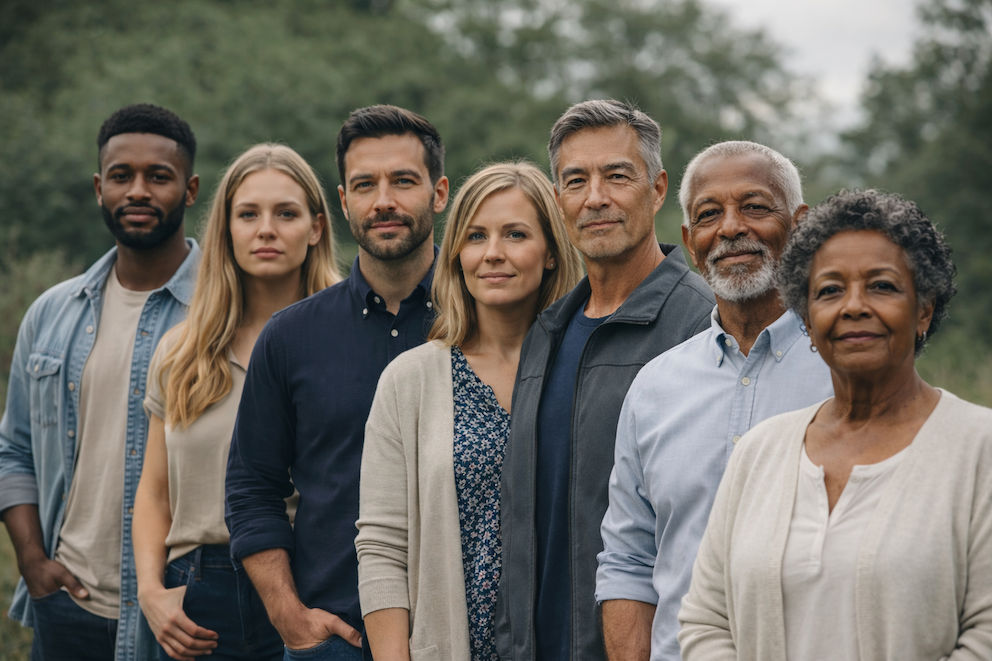
I’m learning that Leadership has to change as life changes.
Two decades ago, my wife and I went to hear a seminar by Gordon MacDonald. We were in our 40s, and he said the questions you wrestle with then are not what you asked at 25 and won’t be the questions you need to answer later. He warned us that you can’t really understand a stage until you’re in it, but we should be wrestling with these ahead of time and maybe asking people who are there ahead of us what it’s like. Time is proving the OG right!
But many leaders make the mistake of trying to answer the wrong questions for the stage of life they are in.
Every decade brings its own invitations.
Its own pressures.
Its own opportunities for formation.
With a hat tip to the old sage whose books are well worth getting hold of, I want to revisit now his idea that each stage of life tends to revolve around a different core question.
Your 20s – Identity
Who am I becoming?
Your twenties are about discovery of who you are and how am I different from my family
You are working out
- what you believe
- what your gifts are
- what kind of person you want to become
- what kind of life you want to build
For many leaders this is when calling first begins to take shape. Energy is high. Passion is high. Possibilities feel endless.
But clarity is still missing – forming.
The temptation at this stage is to rush toward platform and visibility.
But the twenties serve us and others best when they not primarily about influence.
They are about foundation.
Learning.
Serving.
Failing.
Being shaped.
The most important thing you build in your twenties is not a ministry.
It is a life with God.
Your 30s – Priorities
What really matters?
Life accelerates in your thirties.
Responsibilities multiply quickly.
Career grows.
Family grows.
Opportunities increase.
And suddenly life feels crowded.
So new questions begin to surface:
- How do I prioritise my life?
- How do I balance work, family, and ministry?
- How far should I pursue ambition?
- Who actually belongs in my inner circle?
- Why am I not a better person?
The danger in the thirties is simple.
You can build outward success faster than inward depth.
You can become super productive – but the key challenge of the thirties is learning to organise life around what truly matters, not just what is urgent.
Your 40s – Reflection
What has shaped me?
By the time many leaders reach their forties something begins to shift.
Limitations become clearer.
Disappointments accumulate.
Comparisons can creep in.
Questions deepen:
- What influences shaped who I am today?
- Why do some things feel harder than expected?
- Why do some people seem to be doing better than me?
- Why do certain disappointments still affect me?
We hear and see a lot of men in particular doing foolish things around this mid-life time because the forties can be uncomfortable and dangerous, without reflection is what transforms experience into wisdom.
Your 50s – Legacy
What will remain after me?
Somewhere in the fifties the horizon changes again.
You begin to think less about building something for yourself and more about what will outlast you.
Questions like these emerge:
- Why is time going faster?
- Why I my body getting slower?
- How do I process both my successes and my failures?
- Who are the younger leaders I should be investing in?
- What matters most now?
Leadership here begins to shift from achievement to stewardship if we are mature enough to shift our focus being building platforms to building people.
Your 60s – Surrender
What must I let go of?
20 years ago it seemed so far off but now I’m starting this stage i see one of the hardest leadership transitions happens here.
Identity can become entangled with what we have built.
Of course none of this is automatic, you don’t get deeper faith with age you must work at it but if we live long enough sooner or later every leader must ask:
- When do I stop doing the things that once defined me?
- What is yet to be accomplished?
- Who am I if I’m not known for what I what I’m known for – leading what I used to lead?
- What does aging well actually look like?
This stage invites something deeply spiritual.
Surrender.
That’s not giving up, it’s giving it all back to God again and again – letting go with grace.
Allowing God to continue writing the story that I was never the star of, in new ways.
Your 70s – Reproduction
Who will carry the torch I’ve held forward?
If earlier decades were about influence, this stage must become about multiplication.
If we are blessed to live longer and stay the course, the question shifts from:
What have I built?
To:
Who have I built?
I so appreciate leaders like this – those who age well because they become spiritual grandparents.
They encourage.
They pray.
They invest.
They pass on wisdom.
Their greatest contribution is not what they produce, but what they reproduce in others.
The Big Picture Question
Behind every decade sits one bigger question.
What kind of life am I building?
Not what we accomplish, who we become.
And the decades have a way of revealing whether the life we are building externally matches the life God is shaping internally.
BONUS QUESTION – What about teens?
I think there are ways we can empower and entrust leadership to teenagers as long as it’s built from a place of belonging and belief. If that stage is missed, the later ones will wobble.
Teens – Belief and Belonging
Who does God say I am – and where do I belong?
Teenagers are forming the deepest layers of identity – working out:
- What do I believe?
- Who do I belong with?
- What values will shape my life?
- What voices will I listen to?
- Does faith belong to my parents or to me?
This is the stage for borrowed faith to become personal faith.
Young people may still attend church, youth group, or Christian environments, but internally they are deciding their path.
And the people who shape them most at this stage are not usually the upfront preachers like me –
They are:
- parents
- youth leaders
- mentors
- trusted adults
People who create belonging before behaviour.
Because identity almost always grows out of belonging.
If a teenager experiences genuine community, encouragement and spiritual modelling, something powerful happens. Faith becomes owned rather than inherited, and then they become great at passing it on!
—–
IF YOU ENJOYED THIS – SUBSCRIBE (Because I am not on social media) and read this next
Discover more from Anthony Delaney
Subscribe to get the latest posts sent to your email.