
‘There’s actually a lot we CAN do without prayer as a church! We can organise, advertise, preach, plan and keep the machinery running. But what will set us apart?‘
These are my notes from two practical training days on cultivating a culture of prayer with Brian Heasley, International Prayer Director at 24-7 Prayer. Brian and his wife Tracy pioneered the work in Ibiza, bringing prayer and mission together on the streets and he’s now gone global!
There’s plenty here to put into practice in our own lives, ministries and churches.
Prayer and mission: breathe in, breathe out
Activists burn out without a prayer life. Prayer organisations can become insular. Health needs both: breathe in and breathe out.
In Ibiza, one group would go out on the streets for an hour while another group prayed. On the hour, they swapped. Time in God’s presence and time with people who need him, each feeding the other.
We all have a culture of prayer. Examine yours. We can’t delegate or outsource it to those who do it “for us”. Thank God for passionate pray-ers, but we are ALL called to prayer.
In Exodus 33:15–16, Moses refuses to move on without God’s presence. What else will distinguish his people? Our distinctive must be the presence of God, whatever else we do.
What three words describe your current prayer culture? Ask your team. Give the honest answer.
Building a culture of prayer takes ongoing attention. Gardens need work. Relentlessly! Four things help: example it, educate it, celebrate it, embed it.
1. EXAMPLE it: live a life of prayer
Put your own mask on first. You know the instruction on the plane. It applies to leadership too. If you’re going to help others, you need to be breathing.
Do the leadership team pray? If it’s important to the leaders, it becomes important to the team. Be seen in the prayer room. Pray with people. Let them see you depend on God.
In Acts 4:13, people recognised that Peter and John had been with Jesus. Would people recognise that about us?
Joshua stayed at the tent of meeting after Moses returned to the camp (Exodus 33:11). Jesus often withdrew to pray (Luke 5:16), and his disciples asked him to teach them (Luke 11:1). They saw a life they wanted to learn.
Be a lifelong learner. Develop and refresh your personal rhythms. Experiment with different prayer tools and styles. Practise listening. Pray honestly with trusted friends.
Who asks you, “How’s your prayer life?” And would you tell them the truth?
- Am I growing in my relationship with God?
- Would my family recognise that growth?
- Do I have peace at the centre of my life?
- How has my prayer life grown?
There will be seasons of doubt, dryness and darkness. All of those can be turned into prayer too. Bring God what’s really happening. What is his invitation to you in this season?
2. EDUCATE it: a few killer sermons don’t do it
YES, teach prayer. But a few killer sermons don’t do it. How are we equipping and mobilising people to pray?
It’s like learning a language. You get some sounds, then some words. You download a great app. Then you go to the country and discover you haven’t a clue what anyone’s saying. You need immersion!
We can inspire people about why prayer matters and inform them about what it is. Then we need to help them experience it. You learn to pray by praying.
Start with Scripture: Jesus praying before dawn in Mark 1:35; the believers praying together in Acts 1:14; the church devoted to prayer in Acts 2:42. Help people see what prayer looked like and how it shaped their lives.
Draw on church history too. Whose story has inspired your prayer life? Share it. Explore worship, intercession, petition, spiritual warfare and contemplation. Talk honestly about the barriers people face.
Make room for different ways to pray
What do you like doing at a swimming pool? Some float and soak. Some splash and play. Others swim lengths, enjoying rhythm and routine. Then there are the technicians, working on their technique.
People approach prayer differently too. Some value stillness. Others need movement. Some welcome spontaneity; others find a clear structure helps them concentrate. Scripture and thoughtful reflection can awaken the soul.
In our prayer meetings, we may include different personalities by accident. We can do it on purpose. Make room for silence, spontaneous response, structure and the Word. Show people different ways to pray, then let them try.
3. CELEBRATE it: you replicate what you celebrate
Psalm 100:4–5 calls us to thanksgiving and praise. What are we giving thanks for? Tell the stories of encounter and answered prayer, big and small.
Tell the stories of persistence too. There are “suddenlies” in the Bible, but there are also people praying constantly. What do we learn in the constantlies?
We’re not good at waiting. A culture of prayer needs to help people keep praying when the answer hasn’t come by next Sunday.
And tell the stories of unanswered prayer, or we’re only telling half the story. Sometimes prayer is lament. Not every healing happens this side of heaven. People need somewhere to bring their grief and questions as well as their gratitude.
What kind of prayer stories does your community tell? Is there room for someone who is still waiting?
4. EMBED it: put prayer in the diary and the budget
What’s the vision for prayer? Why do you want to pray? Who do you want to engage? What do you want them praying about? How and when will you gather?
Start with your leaders and staff team. Review your daily, weekly, monthly, quarterly and annual rhythms. How do you listen to God together? Where does prayer actually fit?
Plan at least two high points of prayer in the year. A 24-7 prayer room. Prayer walking. Prayer and fasting. A retreat day. Give people a focused opportunity to make space for God.
Then review and refresh the regular rhythms. Who will implement the vision? What time and resources will they need?
Is prayer in your budget?
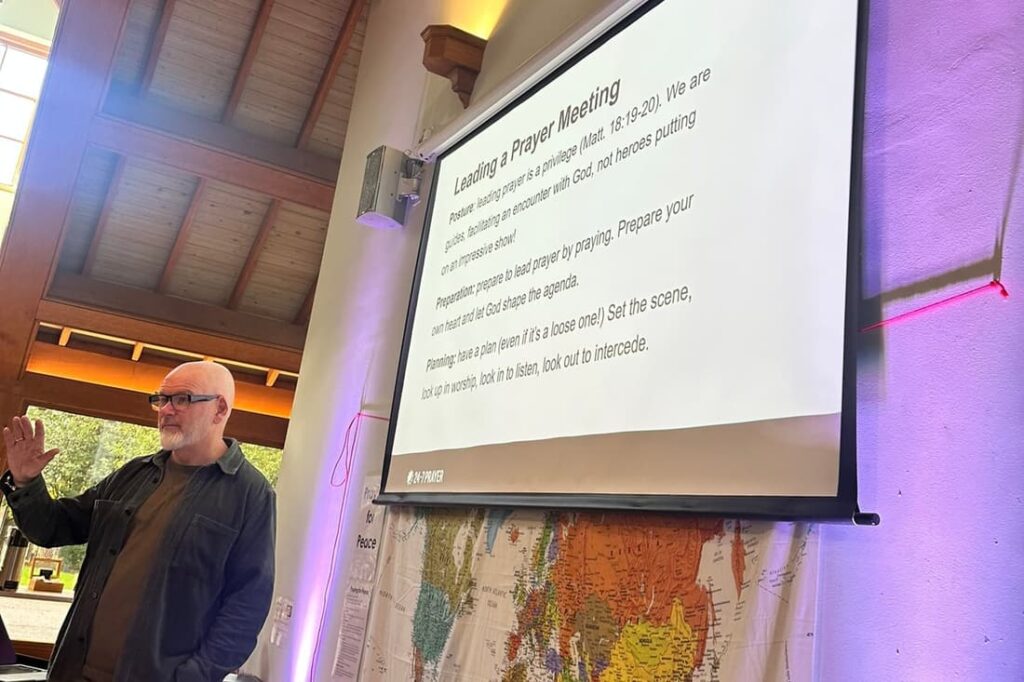
How to lead a prayer meeting
Posture. Leading prayer is a privilege. We’re guides, helping people encounter God. We’re not putting on an impressive show.
Preparation. Prepare to lead prayer by praying. Prepare your own heart and let God shape the agenda.
Planning. Have a plan, even if it’s a loose one. Set the scene. Look up in worship, look in to listen, look out to intercede. Explain what you’re inviting people to do so they can join in.
What will change in your church’s prayer culture?
Go back to those three words describing your prayer culture. Which needs to change? What will you do to help change it?
Bring these questions to your leadership team. Decide what needs to go in the diary, who will take responsibility and how you will resource it. Then pray together.
We can’t delegate or outsource this. Put your own mask on first. We are all called to prayer.
More on prayer
- Pete Greig: Prayer that’s Faithful, Faith-Filled, and Fully Awake
- “What Are You Doing Here?” A Hard Lesson From Elijah
- Explore 24-7 Prayer
Discover more from Anthony Delaney
Subscribe to get the latest posts sent to your email.